
Major/Minor
Learn how half steps shape major, minor, and diminished chords across the scale.
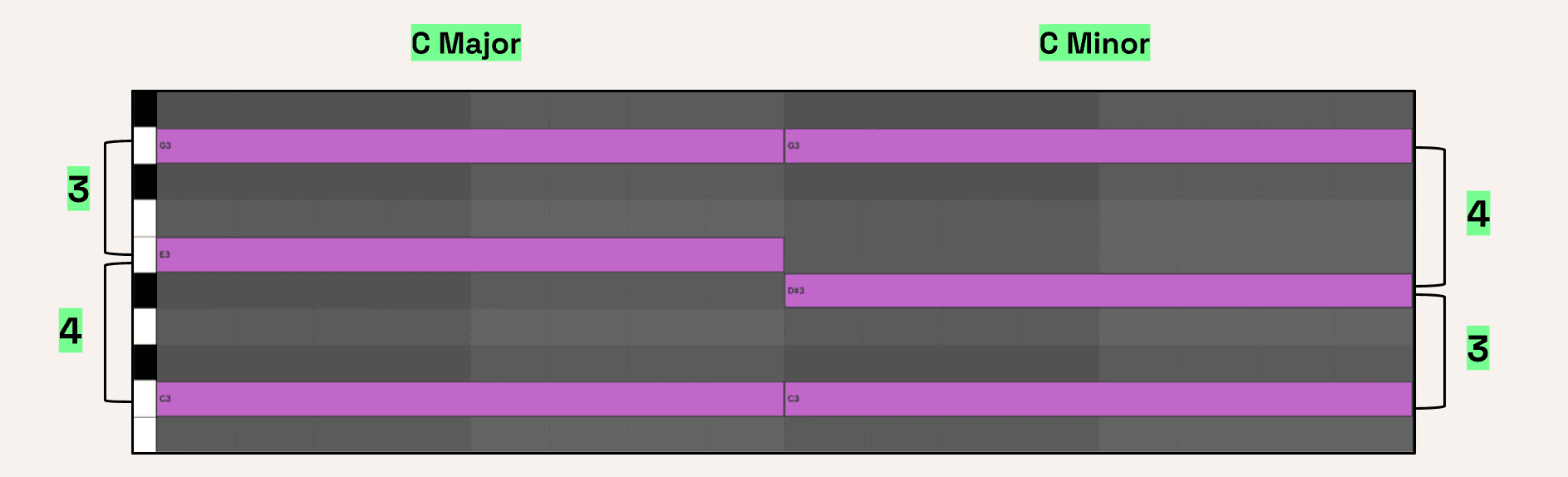
The image above shows two chords built off of the note C. You should notice that the top and bottom notes are the same in both chords. Only the middle note is different!
You should also see 3s and 4s off on either side of the image. Those indicate the number of half steps between each note.
To make a major chord, start with a note and then add another one four half steps above it. Finish it off with a note three half steps above that. For C Major, that’s C, E, and G.
Making a minor chord is exactly the opposite! You start with a note and then add another note three half steps above it, finishing with a note four half steps above that. For C Minor, that’s C, E flat, and G.
Diminished chords have a three half step interval stacked on top of another three half step interval. Take a look below.
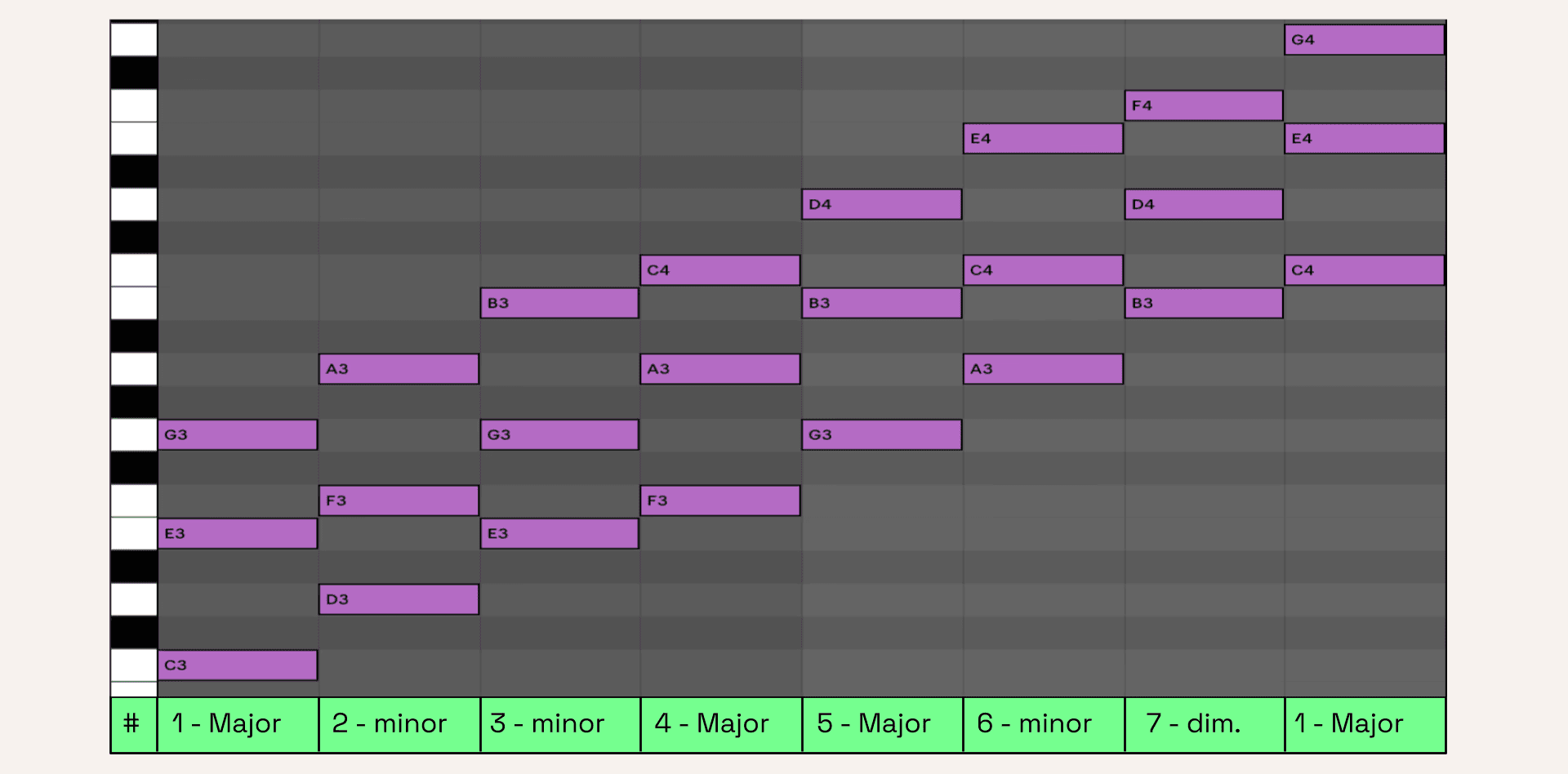
Building triads off of the notes of a major scale will always result in the same order of major, minor, and diminished chords (traditionally written with capital roman numerals for major, lowercase for minor, and lowercase with a little circle for diminished):
The first, fourth, and fifth chords will always be major (I, IV, V).
The second, third, and sixth chords will always be minor (ii, iii, vi).
The seventh chord will always be diminished (vii˚).